Date Published 19 February 2026
Thamesmead – The man-made town with lakes and no trains
15th February
Leisure
Walking and outdoors
Thamesmead
Ezekiel Bertrand Profile Image
By Ezekiel Bertrand
Reporter
Share
Thamesmead is a neighbourhood in south east London with lakes, canals, and surprisingly green spaces.
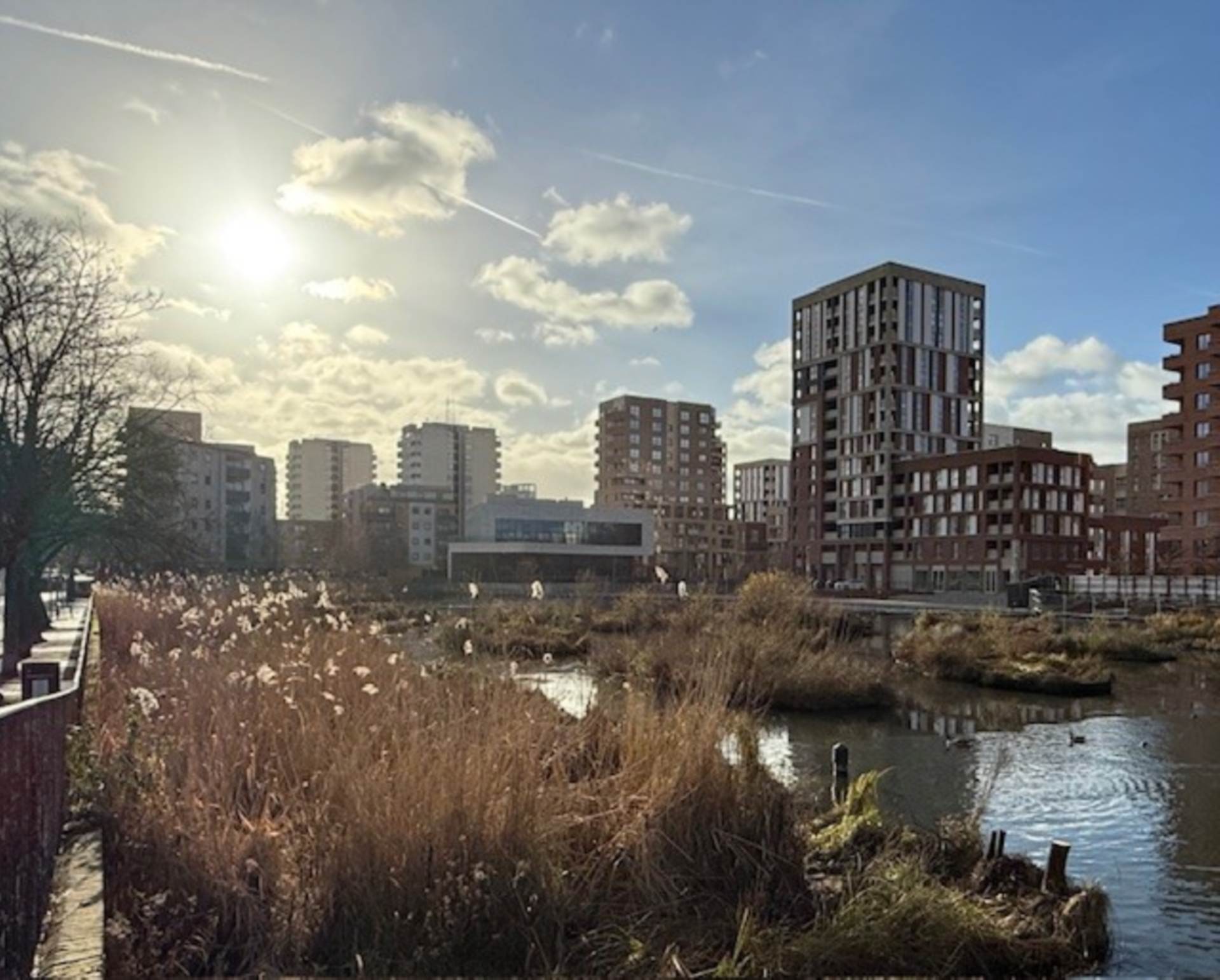
Unlike many outer London suburbs, Thamesmead feels calm and slightly removed from the bustle of the city, with quiet streets, wide skies, and water reflecting sunlight across its five main lakes.
The area, straddling the border between Greenwich and Bexley, is home to around 240 hectares of parks and green spaces and around seven kilometres of canals, making it unusually verdant and 'blue' for an outer London neighbourhood.
Thamesmead is not short of green spaces
Residents and visitors can enjoy Southmere, Birchmere, and Gallions Lakes, which are ringed with paths, mounds, and dense tree planting.
The lakes offer big skies, water views, and sightings of wildlife including swans, kingfishers, and herons.
Thamesmead residents and volunteers have helped improve the lakes, installing floating wetlands and planting thousands of reedbed plants to boost water quality and create habitats for fish, insects, and nesting birds.
Meanwhile, the main road through the estate has been transformed into a car-free ‘green spine,' allowing pedestrians and cyclists to travel long stretches of park and canal-side without encountering traffic.
Thamesmead is actively used for leisure and everyday life.
The housing provider Peabody runs rooftop yoga classes overlooking Southmere Lake and hosts regular nature-themed community events.
Thamesmead, as the name suggests, is very close to the River Thames.
The parks and canals are used for dog-walking, fishing, and informal children's play.
Guided walks link Lesnes Abbey Woods to Crossness, giving residents a chance to explore lakes, parks, and modernist architecture in a single trip.
Recent investment at Southmere Lake has further improved the area.
A 23-metre fountain now oxygenates the water, fish-free nursery channels nurture tadpoles and insects, and better access to the water's edge encourages families and walkers to spend more time by the lake.
Thamesmead is generally man-made and was originally conceived in the mid-1960s by Greater London Council as a futuristic 'town of tomorrow' built on the Erith marshes.
Families were relocated from inner-city slums to a design that combined concrete walkways, elevated decks, lakes, and parkland.
The estate's bold and brutalist architecture has attracted photographers and filmmakers, including Stanley Kubrick, who filmed scenes from A Clockwork Orange there.
The neighbourhood has recently celebrated 50 years of Thamesmead, highlighting its place as one of London's most significant post-war social housing experiments.
Thamesmead also has notable heritage sites.
Crossness Pumping Station, a Grade I listed Victorian sewage works known as the 'Cathedral of the Marshes,' features restored cast-iron interiors and some of the largest surviving beam engines in the world.
The pumping station runs steam days, guided tours, and events alongside Thames-side festivals, giving visitors the chance to see Victorian engineering in action.
Transport links in Thamesmead are limited, with no train or Tube station in the neighbourhood.
Residents rely on buses to Abbey Wood, Woolwich Arsenal, or Plumstead, where they can connect to the Elizabeth line, DLR, or National Rail.
The absence of a station contributes to the area's 'cut-off' reputation but also helps make the parks, lakes, and canals feel more like local spaces than tourist attractions.
The neighbourhood's combination of green and blue spaces, community involvement, and distinctive architecture makes Thamesmead a hidden gem in London.
Residents enjoy a mix of open landscapes, leisure activities, and historic landmarks, all while maintaining a sense of calm removed from the city's usual bustle.
House prices in Thamesmead have an overall average of £375,355 over the last year.
The majority of properties sold were flats, which went for an average of £380,738.